Our Blog

Healthy Gum, Healthy Mouth

March 24th, 2021

“Shouldn’t that be healthy gums,” you’re thinking? And, of course, you’re correct. Healthy gums are extremely important not only for our dental well-being, but for our overall physical health.

But that’s a subject for another blog! Today, we’re talking about healthy gum—chewing gum, that is. Because choosing the right chewing gum can actually improve your dental health.

Oral bacteria use the foods we eat, especially sugars and simple carbs, as fuel to produce acid. These acids attack our tooth enamel, gradually weakening the minerals in the tooth surface and allowing cavities to develop. Clearly, we want to reduce these acids to help prevent decay. Luckily, our bodies have a natural defense against acid attacks—saliva.

Saliva works to protect our enamel in three ways:

  • It helps neutralize and wash away acids in the mouth.
  • It rinses away the food particles which bacteria feed on.
  • It strengthens teeth by providing the necessary minerals our enamel needs to “remineralize” after acids have weakened the tooth surface.

Studies have concluded that chewing sugarless gum for 20 minute after a meal can help prevent cavities. Why? Because chewing gum increases saliva production. You are actually reducing the effects of harmful acids, washing food particles away from your teeth, and strengthening weakened enamel with every stick! Some artificial sweeteners are even thought to inhibit the growth of the bacteria that lead to decay.

With all that in mind, it’s also healthy to know when you shouldn’t chew gum:

  • When the gum contains sugar. Even with an increase in saliva production, bathing your teeth in sugar as you chew does your enamel no favors!
  • When you wear braces. Gum can stick to your brackets and between your brackets and your wires. And while trying to clean gum from your appliance is no one’s idea of fun, an even more unpleasant possibility is the chance that gum might bend your wires out of shape. Sugarless gum is not quite as sticky as regular gum, but before you open that first pack, check with your orthodontist to see if you might be putting your orthodontic work at risk.
  • When you have jaw problems such as TMD, TMJ or other temporomandibular concerns, or if you develop jaw pain while chewing gum.
  • You should never give gum to a child too young to understand that it should not be swallowed. Beyond acting as a choking hazard, continual gum swallowing can lead to diarrhea, blockages, abdominal pain and other serious problems. Talk to your Drs. Julie Bailey, Jacob Woods, Marci, Glenn and Brian Beck about the right age for chewing gum.

While chewing sugarless gum has the potential to improve dental health, remember it should never take the place of regular brushing and flossing—still the best way to prevent cavities at home. Talk to Drs. Julie Bailey, Jacob Woods, Marci, Glenn and Brian Beck about the possible benefits of sugarless gum at your next visit to our Tallahassee, FL office, and we can make recommendations based on your individual dental history. Because whether it’s healthy gums or healthy gum, we’re here to help.


Going Green for St. Patrick’s Day?

March 17th, 2021

Happily for all of us who like to celebrate with friends and family, there’s no need to be Irish to enjoy St. Patrick’s Day. Every March 17th, many of us take the opportunity to display a bit of Gaelic spirit.

  • Green Clothing (it’s tradition!)
  • Green Hat (for a jaunty look)
  • Green Shamrock (always the perfect accessory)
  • Green Hair (for the adventurous among us)
  • Green Grins?

Here’s where we draw the line. Emerald Isle? Delightful! Emerald smile? Not so beguiling.

That traditional St. Patrick’s party fare—green-frosted sweet treats and green-colored pastries and green-foamed beers—is full of green-tinted food dyes, which can leave us with teeth in subtle shamrock shades. Luckily, most of us will have only a very temporary tinge to remind us of our dietary shenanigans, and there are simple ways to rid yourself of the green sheen:

  • Indulge sparingly in colorful cuisine, and drink water afterwards to rinse away green-dyed foods and beverages.
  • Use a straw for green drinks.
  • Brush your teeth. (Not only will you brush away the green, but you’ll brush away the sugars from sweet green desserts and the acids from sour green brews.)
  • Try a whitening toothpaste.

One special note: if you’ve just whitened your smile, best to eliminate strong food dyes from your diet for a few days. Teeth are more sensitive to staining after whitening, because the whitening process temporarily makes them more porous. Give yourself a few days, and your enamel will be back to (stain)fighting strength.

So, celebrate on the 17th and feel secure that on the 18th, your smile won’t be “wearing the green” any longer. But if you find that you’re not happy with the appearance of your smile anytime during the year, if you have more permanent staining caused by natural darkening over time, or workdays fueled by black coffee, or a diet filled with tomato sauce, dark berries, red wine, and other tasty (but discoloring) food, you’re still in luck.

Ask Drs. Julie Bailey, Jacob Woods, Marci, Glenn and Brian Beck about professional whitening procedures at our Tallahassee, FL office for a brighter, more confident smile. And with a bright, confident smile, every day’s a reason to celebrate!

What exactly is periodontal disease?

March 10th, 2021

Periodontal disease is an infection of the tissues that surround and support your teeth. Our team at Smiles By Beck wants you to know that this common ailment can be fixed with little worry if treated properly.

Periodontal disease is usually identified through dental X-rays, probe depths, and visual exams. If left untreated, it can lead to tooth sensitivity, premature tooth loss, or discomfort and pain in your mouth. Some common symptoms to watch for include bleeding or swollen gums, bad breath, teeth movement, or jaw displacement.

Factors that may increase your risk of developing periodontal disease may include poor oral hygiene, smoking/chewing tobacco, genetics, stress, inadequate nutrition, pregnancy, diabetes, and some medications. Some of these causes are avoidable, but others are not.

If you have diabetes, you may be more prone to periodontal disease due to the greater difficulty in controlling blood glucose levels. Studies have shown that once periodontal disease is treated, glucose levels become more responsive to control as well. If your risk for periodontal disease is heightened by one of these factors, make sure to watch for the signs and keep up with your daily oral hygiene routine.

How can you treat this common disease that affects almost half of the population? Depending on the severity, treatment can include a medicated mouth rinse, antibiotic treatment, laser therapy, or scaling and root planing. It’s useful to recall that this condition can vary from mild to severe, which is why you should make an appointment at our Tallahassee, FL office if you notice any of the above symptoms.


Make Brushing With Your Child Fun!

February 24th, 2021

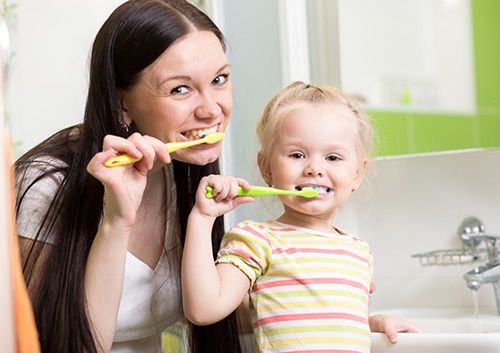
It’s no secret that kids and adults have different priorities: your duty is to raise a happy, healthy child, but your little one’s only priority may be to have fun. When it comes to brushing teeth, it can be hard to combine a healthy habit with having fun. You might fear it can’t be done, but with a little creativity, brushing time can be a great experience for both of you!

Make It a Party

Brushing time doesn’t have to be a chore when you throw a little party! Get Mom and Dad together so the whole family can brush their teeth at the same time.

Let your child choose a song to dance to while you all brush for the required two minutes. Your son or daughter may grow to love this silly routine, especially when the parents are clearly dedicated to brushing their own teeth as well.

Big Kid Decisions

Kids love the responsibility of making “big kid” decisions. Keep a variety of toothbrushes, colors of floss, and toothpaste flavors on hand so they can choose something “new” each time they brush, just like when they visit our Tallahassee, FL office.

Not only can this help them grow more comfortable with the idea of seeing the dentist, but they’ll love having the responsibility of picking what would be fun at brush time.

Practice Makes Perfect

It’s true that the only way to get better at something is to practice, practice, and practice. Have your child practice brushing on his or her favorite stuffed animal, and use that opportunity to teach your youngster how to hold the brush and use circular cleaning motions. Showing how you brush your own teeth can also be worthwhile.

There’s An App For That

Did you know there are lots of fun apps that encourage good brushing habits among children? Brands like Oral-B and Aquafresh have free apps you can download on your phone.

The child gets to select a character, scenery, and a song he or she would love to accompany the task of brushing. If you have a daughter, she might like to use the Tooth Fairy Timer, which allows her to pick her very own fairy as her brushing buddy.

The important things to remember when you seek to establish good brushing habits is to keep it fun and stay consistent with your routine. It may take some getting used to, but after a while your child will become familiar with brushing and might even look forward to the new dental routine.

Practice Contact Information