
Our Blog

Generic Clear Aligners vs. Invisalign®

April 22nd, 2020
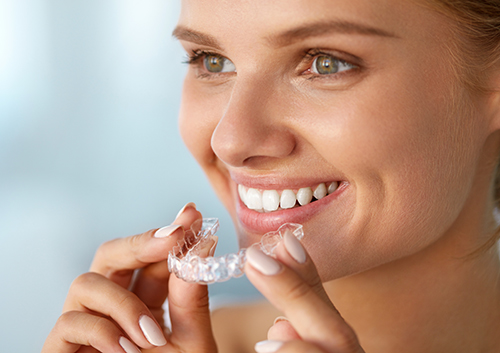
You may have a talent for home repairs. You may be able to rebuild your computer. You may even be able to put together a whole room of furniture armed only with flat-box kits and an Allen wrench. But, please—don’t try do-it-yourself orthodontics!

Now that generic clear aligners are available, you might consider giving them a try to save some money. But is straightening your own teeth really a good idea? Before you are tempted, let’s look more closely at the products and the dental science involved.

Invisalign®

  • Invisalign clear aligners are used by orthodontists and dentists with experience in custom treatment for your smile. A 3D image of your teeth will be captured by the iTero Element® scanner. Using special software, your doctor can map out each projected shift in your teeth, and even show you a projection of your finished smile!
  • Your Invisalign aligners will be tailored to fit your teeth precisely using the 3D scan and 3D printing. They are made from SmartTrack® material, a product specifically engineered for a perfect, comfortable fit. Invisalign aligners are even trimmed to fit your individual gumline to prevent irritation.
  • When your first sets of Invisalign aligners arrive at our Tallahassee, FL office, Drs. Julie Bailey, Jacob Woods, Marci, Glenn and Brian Beck will check for fit, answer any questions you might have about use and care, and let you know what to look for and what to expect. Your progress will be monitored with visits every six to eight weeks. (And for parents of teens, Invisalign aligners can offer blue “compliance indicators” to let you know they are being worn the 20-22 hours a day necessary for the best and fastest results.)

Generic Aligners

  • You might be required to make a putty mold of your own upper and lower teeth, which is not the easiest thing to do well, and to take selfies of your teeth.
  • The aligners will be sent to you in the mail. They are generally made of hard plastic with generic gumlines. There will be no one to tell you if the aligners fit properly.
  • They are sometimes less expensive because there is no in-person medical supervision. A dental professional working for the company will look at the model created from molds you submit, and recommend a series of aligners to correct the problems he detects by looking at the model and your selfies. This supervisor will not be able to assess the overall dental health of each patient to make sure teeth and gums are healthy and ready to start treatment, and will not be able to tell if the teeth are moving properly or improperly once the aligners are in use.

Finally, while generic aligners may potentially have some success in minor tooth straightening, they are not created to deal with complex bite issues or malocclusions.  In fact, using generic aligners with no supervision can cause more serious dental problems than a patient started with.

Sure, sometimes a do-it-yourself project turns out well. But your teeth and bones are too important for home improvement. When it comes to creating a beautiful, even smile and balanced, comfortable bite while making sure of your dental health, it’s always best to trust a professional like Drs. Julie Bailey, Jacob Woods, Marci, Glenn and Brian Beck to provide you with gentle, tested, and successful care!

Finding the Right Dental Products for Your Child

April 15th, 2020

Drs. Julie Bailey, Jacob Woods, Marci, Glenn and Brian Beck and our team know how overwhelming it can be to pick the right dental products for your children. When you visit the dental aisle at the grocery store, you see too many options to choose from. We want to help you make an informed decision based on your son or daughter’s needs.

First, you should consider your child’s age and where he or she is in terms of development. Most kids are unable to floss properly until around 12 years of age because of the necessary dexterity. If your youngster is under 12 years old, make sure to assist with flossing every night.

Another option is to use flossers for children. This will make the exercise a bit easier for your little one, because flossers have different-sized handles to fit all ages of hands.

When you’re looking for a child’s toothbrush, the head should be a little bigger than the top portion of your son or daughter’s thumb. If a toothbrush is too big, it won’t be able to reach small areas in the mouth properly. Battery-powered toothbrushes are also recommended because they improve overall brushing quality for both adults and children.

If your child is too young to spit, he or she should use toothpaste without fluoride. Small children tend to swallow toothpaste, even when they don’t intend to. Try looking for a toothpaste that has xylitol listed as the first ingredient. This is a natural sweetener that is beneficial to teeth.

You should also try to identify a flavor that appeals to your child. Same as adults, children like to brush more if they enjoy the flavor that lingers in their mouth after brushing.

It’s smart to look at the ingredients in a toothpaste for the benefits your child needs. Some toothpastes contain sodium fluoride, which fights effectively against cavities. If your child has a sweet tooth, or has already had a cavity, we recommend buying a toothpaste with this ingredient.

Stannous fluoride is another popular ingredient that discourages cavities and includes anti-bacterial properties. You should also watch for the ingredient triclosan, which also suppresses bacteria. These ingredients are both recommend for children who have a high risk for cavities.

Anti-sensitivity toothpaste should also be easy to find in the dental aisle of the store. It contains potassium nitrate to help with sore gums and teeth.

If you’re still unsure which dental products your child should be using, contact our Tallahassee, FL office. Once we have general information about your child and his or her dental health, we can guide you in the right direction.

When it comes to picking the right toothbrush, toothpaste, floss, and mouthwash for your child, Smiles By Beck is always here to help.

What is gingivitis, and how can I treat it?

April 8th, 2020

Gingivitis is an early stage of gum disease that results when bacteria in your mouth cause inflammation in your gums. This is a common condition, and you can treat it effectively if you are aggressive. Otherwise, it could develop into more advanced gum disease, or periodontitis, and you could lose one or more teeth.

Watch for symptoms of gingivitis so you can ask Drs. Julie Bailey, Jacob Woods, Marci, Glenn and Brian Beck for help as soon as you need it. Strategies for treating gingivitis include thoroughly cleaning your teeth and assessing the scope of your gingivitis and how serious the problem is.

Gingivitis: Early Gum Disease

Your mouth contains many bacteria that form plaque, which is a sticky substance. You can get rid of plaque by brushing well, but if you don’t, it can build up on your teeth and form tartar. Bacteria can make your gums inflamed and cause pain and bleeding, or gingivitis. Other symptoms include loose teeth, bad breath, receding gums, and sensitive teeth. You’re at higher risk for gingivitis if you’re a smoker, if you have a weakened immune system, or if you have diabetes.

Assessment and Diagnosis

If you think you recognize the symptoms of gingivitis, contact our Tallahassee, FL office to make an appointment. We will ask you about your risk factors for gingivitis and examine your teeth and mouth for signs of red and swollen gums. We may also measure the pockets around your teeth. If they are larger than usual, your gingivitis may be more advanced. Finally, will take some X-rays to get a picture of the bone structure of your jaw.

Deep Cleaning

You can’t get rid of the tartar on your teeth just by brushing at home. Instead, you need a deep cleaning consisting of scaling and root planing. Scaling involves scraping the plaque off of your teeth, both below and above the line of your gum. In root planing, the rough surfaces of your teeth where tartar is more likely to build up are smoothed. A laser may be used to make the procedure more effective, more accurate, and more comfortable.

Road Trip!

April 1st, 2020

The bags are packed, the trunk is loaded, the route is programmed into your GPS, the playlist is set, and your destination awaits! Sometimes there’s just nothing more appealing than a road trip. So, to make your trip even more enjoyable, here are some dental tips to help keep you feeling clean and fresh over the long haul.

  • Fuel Up

If you’re bringing some road snacks, be sure to include a few that will help clean teeth and freshen breath. Packing a supply of bottled water helps you stay hydrated, washes away food particles, and eliminates the bad breath caused by dehydration. Carrots and apples are not only nutritious and tasty, they apply a bit of gentle scrubbing action to your enamel as you chew. Traditional travel favorites like granola bars, beef jerky, and chips tend to stick to the teeth and provide cavity-causing bacteria a leisurely feast, so enjoy them in moderation. (If you’re driving, save the snacks for a rest stop—not only is eating while driving prohibited in some areas, it’s a distraction you don’t need on the highway.)

  • Roadside Diners

The occasional sticky, sweet, or chewy indulgence is fine at home, but when you have hours in the car ahead of you, you might want to turn down the pecan pie, the giant pretzels, and the roadside sea salt caramels. Again, cavity-causing bacteria love sugars and simple carbs, and food that finds its way into tooth crevices finds its way onto their menu. And, it goes without saying, passing up garlic, onions, and spicy foods will help your mouth feel fresher longer—and make your travel companions happier.

  • Car Wash

Bring a travel-sized toothbrush and tube of toothpaste with you for a quick cleaning when you stop for a break. A ventilated case will keep your brush dry (bacteria like damp conditions) and away from questionable surfaces. Disposable mini-travel brushes are available that come with a bead of cleaner pre-loaded and ready to use—you don’t even need water for a cleaner mouth and fresher breath. Food particles do not make good travel buddies so don’t forget dental picks or floss. And if you can’t brush right away, try a rinse with water or chew a piece of sugarless gum. Sugar free gum can help stimulate saliva production, which is a good way to wash away food particles and neutralize acids in the mouth.

  • Roadside Repair

Even with the best preparation, accidents can happen. That’s why you have a spare tire and a lug wrench in your trunk. It pays to be prepared for a dental emergency on the road as well. There are dental travel kits available in stores and online, or create one for yourself. Along with your first aid kit, pack dental picks, antimicrobial wipes, sterile gauze, a mirror, and any other supplies you think might come in handy. If you wear braces or a retainer, be sure to include dental wax in case of an uncooperative wire, and a case to protect and keep track of your retainer. And it’s a good idea to keep our Tallahassee, FL office’s number on hand in case of emergency.

It’s a big country, and cruising the streets and highways is a wonderful way to explore it! But if you’re having any dental problems, be sure to see your dentist before taking off—after all your preparation, you don’t need a dental emergency to ruin your trip. Then, pack your bags, load your trunk, set your GPS, pick a playlist with something for everyone, and get ready to enjoy happy travels and healthy smiles!

Practice Contact Information