
Our Blog

Find Out how Your Diet can Cause Cavities

November 17th, 2021
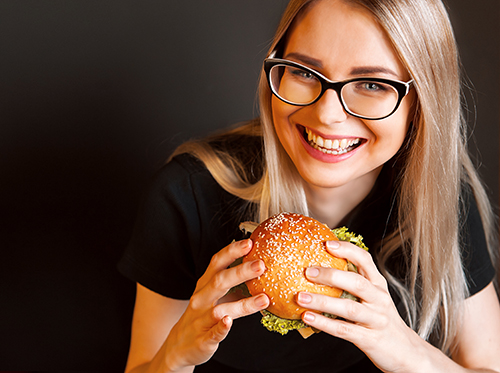
Sometimes food that’s good for your body isn’t necessarily the best for your teeth. Drs Julie Bailey, Jacob Woods, Marci, Glenn, and Brian Beck and our team want you to know which healthy foods can harm your teeth and gums, and what steps you can take to continue enjoying these foods, even when you’re dieting.

When you begin to substitute empty calories with whole foods, make sure you also remember to focus on your dental health. The majority of people tend to switch out sugary foods in favor of fruits and vegetables when they diet.

It’s worth knowing that most fruits are highly acidic and composed of natural sugars. Some of the highly acidic fruits to watch out for include apples, grapes, strawberries, pineapples, blueberries, oranges, and grapefruit. Moderation is key here, as with all other things. Fruits can be a great source of energy to help you through your day, but try not to overdo them.

Often, people also incorporate more leafy greens into their diets, which mean plenty of salads. Salad dressing is another item you’ll want to watch out for. Many dressings are filled with vinegars and sweeteners that include harmful acids, which change the pH of your mouth. When your mouth shifts from alkaline to acidic, your smile also turns to a higher risk for erosion and decay.

Rather than get rid of these foods altogether, simply change what you do after you eat them. Rinse your mouth out with water, brush your teeth, or eat alkalizing foods after consuming these acidic foods. Healthy alkalizing foods include dairy products such as eggs and yogurt, or any type of vegetable.

If you have questions regarding your current diet and its effect on your oral health, please contact our Tallahassee, FL office and speak with a member of our staff. If you’ve begun to make changes in your diet toward a healthier lifestyle, we hope these tips can help your make positive changes to your oral health. Our team at Smiles By Beck wants a healthy lifestyle to be a top priority in your life.


Questions on Dental Implants? We’ve Got You Covered.

November 10th, 2021

Whether you’ve lost a tooth from decay, are preparing for dentures, or were born with a gap where a tooth should have been, you could be a candidate for dental implants.

Dental implants have changed a lot since their debut in 1965, thanks to continuing advances in design and technology. Today, you no longer have to worry about whether dental implants might have a negative aesthetic impact on your smile.

So what are dental implants? Pretty much what they sound like: An implant is a replacement tooth that substitutes for a missing natural one. It gets placed through several steps; it’s a process that can take a few months.

The initial step involves the surgical implantation of the implant root, which resembles a small screw. After that’s placed, the top is covered with gum tissue to enable it to heal faster. This is an essential phase in the process, since this portion of the implant will serve as the base of support for everything else.

In the second step, the implant gets uncovered and an implant restoration (or crown) is created and affixed to it. After that, you’ve got yourself a new tooth!

While dental implants require a little special care, it’s all easily manageable. All you have to do at home is make sure you brush and floss your implant daily, the same as you would for any other tooth. Although an implant can’t develop a cavity, if something were to get stuck in it, that could lead to a gum infection.

If you have any other questions about dental implants, give our Tallahassee, FL office a call!

Osteoporosis and Oral Health

October 27th, 2021

Today, Drs Julie Bailey, Jacob Woods, Marci, Glenn, and Brian Beck and our team at Smiles By Beck thought we would examine the relationship between osteoporosis and oral health, since 40 million Americans have osteoporosis or are at high risk. Osteoporosis entails less density in bones, so they become easier to fracture. Research suggests a link between osteoporosis and bone loss in the jaw, which supports and anchors the teeth. Tooth loss affects one third of adults 65 and older.

Bone density and dental concerns

  • Women with osteoporosis are three times more likely to experience tooth loss than those without it.
  • Low bone density results in other dental issues.
  • Osteoporosis is linked to less positive outcomes from oral surgery.

Ill-fitting dentures in post-menopausal women

Studies indicate that women over 50 with osteoporosis need new dentures up to three times more often than women who don’t have the disease. It can be so severe that it becomes impossible to fit dentures correctly, leading to nutritive losses.

Role of dental X-rays in osteoporosis

The National Institute of Arthritis and Musculoskeletal and Skin Diseases (NIAMS) released research that suggest dental X-rays may be used as a screening tool for osteoporosis. Researchers found that dental X-rays could separate people with osteoporosis from those with normal bone density. As dental professionals, our team at Smiles By Beck are in a unique position to screen people and refer them to the appropriate doctor for specialized care.

Effects of osteoporosis medications on oral health

A recent study showed that a rare disease, osteonecrosis, is caused by biophosphenates, a drug taken by people for treatment of osteoporosis. In most cases, the cause was linked to those who take IV biophosphenates for treatment of cancer, but in six percent of cases, the cause was oral biophosphenates. If you are taking a biophosphenate drug, let Drs Julie Bailey, Jacob Woods, Marci, Glenn, and Brian Beck know.

Symptoms of osteonecrosis

Some symptoms you may see are pain, swelling, or infection of the gums or jaw. Additionally, injured or recently treated gums may not heal: teeth will be loose, jaws may feel heavy and numb, or there may be exposed bone. Some of the steps you can take for healthy bones are to eat a healthy diet rich in calcium and vitamin D, regular physical exercise with weight-bearing activities, no smoking and limited use of alcohol, and report problems with teeth to our office, such as teeth that are loose, receding gums or detached gums, and dentures that don’t fit properly.

For more information about the connection between osteoporosis and oral health, or to schedule an appointment with Drs Julie Bailey, Jacob Woods, Marci, Glenn, and Brian Beck, please give us a call at our convenient Tallahassee, FL office!

How safe are dental X-rays?

October 20th, 2021

Drs Julie Bailey, Jacob Woods, Marci, Glenn, and Brian Beck and our staff rely on digital X-rays to help us diagnose oral conditions and process images at incredibly high speeds. You can also view digital X-rays in real time while we examine your mouth with an intraoral camera and upload the images to a software program. A chairside computer monitor lets you see these images as we refine areas of concern to ensure an accurate diagnosis.

But are dental X-rays safe?

Yes! They emit 80 percent less radiation than exposure-type X-rays and provide detailed images to improve diagnosis and treatment. We can now detect dental problems in their earliest stages without subjecting you to unnecessary radiation. The amount of radiation released by digital X-rays is “negligible,” which means the amount is so small, that it can be safely disregarded.

Safe enough for children and pregnant women, digital X-rays detect microscopic pitting in tooth enamel and other abnormalities in the oral tissues that might have remained undetected with traditional X-rays. When Drs Julie Bailey, Jacob Woods, Marci, Glenn, and Brian Beck and our staff discover dental caries in their earliest stages, we can initiate treatment measures that will effectively prevent cavity development, tooth decay, and potential tooth loss.

Patient appointment lengths are shortened with digital X-rays as well, because images are immediately viewable and do not require the exposure time associated with old-style X-rays.

How Digital X-Rays Differ from Traditional X-Rays

Instead of using cardboard-contained film, we insert a small sensing device about the size of a pen in your mouth and engage the digital X-ray machine by manually manipulating control buttons. Within seconds, images appear on the monitor that can later be stored in your file or sent to another doctor for further examination.

The increased resolution afforded by digital X-rays means that patients are able to understand the seriousness of their dental issues better, and are more inclined to follow through with procedures recommended by Drs Julie Bailey, Jacob Woods, Marci, Glenn, and Brian Beck.

Safer, Better and Faster

For detection of cancerous tumors in their early states, digital X-ray technology offers vast improvements over film X-rays because of its cutting-edge image processing capability. Early detection of oral cancer and dental caries is the best way to prevent any type of oral health problem from exceeding the treatable stage.

Practice Contact Information